Monday, May 7, 2012
Reading Log
As a result of multiple recommendations from multiple friends, I divulged into the Percy Jackson series. I made it to about page 160 this week which is quite a bit more than my usual reading. So far it is a very interesting book and it hooked me right away. I saw the movie a while ago and the book definitely out does the movie. There are much more action scenes and plot strengthening sequences that entrance me much more than the movie. Stella slept through my reading for most of the week so she must be bored by the book but hopefully she'll wake up for this week.

Sunday, April 29, 2012
Reading Log
I finished the last hunger games book today on my way home from a soccer game. I really can't decide if I like the ending or not. I like how she ended up with Peeta but I really thought there was gonna be something more at the end. Something drastic like Katniss being elected president or something. I also didn't like how Finnick died. I thought he was a great character and one of my favorites. I didn't get the chance to read to my chinchilla this week unfortunately but she could probably use a break from the attention anyways.
Sunday, April 22, 2012
Reading Post
Well it seems like I have done a million of these posts and the year will never end but I keep moving along trying to accomplish these goals. But instead of starting some non fiction book I finished Catching Fire and started Mockingjay. The ending of Catching fire was so surprising. I didn't see it coming at all. But I do not know if I really liked it or not though. It ended a little to abruptly when I was hoping for a little bit more. I'm worried that Mockingjay might not have very much action too and it might be boring. But I guess I will have to read more to find out.
Monday, April 16, 2012
Reading Log 3
So I never thought I would get so entranced in the Hunger Game Series to have 300 pages of the second book read in less than a week. I'm not sure what it is - probably the suspense of the action scenes and the games - that force me to keep the book focused in front of my face and to wipe away the sleep from my dreary eyes. I did continue to read in front of my chinchilla and I think maybe she is starting to like all the attention. But as I get further and further into the Hunger Games Series, I get farther and farther away from completing my goal of reading more diverse things.
Thursday, April 12, 2012
Note 2 and 3
Ferris Bueller's Day Off Parade Scene
For all of you deprived children who have not seen what some critics claim to be one of the funniest movies of all time, this scene consists of Ferris Bueller, a high-school senior, singing on a parade float in the middle of downtown Chicago. The celebratory exclamation of the crowd and the idealized image of Chicago exudes a sense of playful comfort that anyone could easily fit in the city. The first song that Ferris sings is harmonious and serene causing the crowd to react surprised and almost disappointed at the gregarious teenager. However, the police guards choose not to remove him from the float out of either a sense of improbable disregard or self-amusement. This action illustrates that the city is accepting of young people having fun as well as easily entertained. Soon after, the disparaging tone picks up as Ferris begins to sing "Twist and Shout." Everyone in the city begins to dance for no apparent reason other than to have fun. Even construction workers, babies, and obese men join in the random gamboling. The exceeding comfort level of the crowd demonstrates that the citizens of Chicago really don't care about differences between them, but instead they are all out to enjoy life in the city.
City Life by Viraj Bhanshaly
Depicted in Viraj Bhanshaly's poem "City Life," the constant congestion of people, noises, and cars in the city - only interrupted by the awkward silence of the early hours in the morning - illustrates the special needs of city dwellers to have patience and an admiration for the large range of strange actions going on in the city. The silence of the city only exists at night where "the city streets are calm" and "everyone is sleeping." However, when the sun rises, "the silence disappears" and and is never able to overcome the roar of city busses and taxi cabs. Bhanshaly first characterizes the city as being overly noisy in his perspective by describing the night when it is quiet as peaceful and needed almost as if he longs for the moment when sleep falls over the city. He also describes the night as the time when "heaven awakes." The overly positive diction that Bhanshaly employs towards silence exudes a sense that silence is the only good part of the city. However, he ends the poem by saying that even though the city is overwhelmed by "the screech of cars," "motorbikes going racing," and "the lively dynamic roads" that are not easy to navigate, Bhanshaly loves the city because even though it is expensive to live in, "it gives you range." Bhanshaly's contradiction of the earlier negative tone in the poem suggests that he does care about living in the city and that he couldn't imagine living else where. Also, he chooses to apply a constant ABCB DEFD etc. rhyme scheme. The inclusion of this rhyme creates a rhythm and flow to the poem almost to mimic the steady hum of traffic down the crowded streets. It is the constant honking and yelling of traffic in every city that makes life in urban areas unique and enjoyable.
For all of you deprived children who have not seen what some critics claim to be one of the funniest movies of all time, this scene consists of Ferris Bueller, a high-school senior, singing on a parade float in the middle of downtown Chicago. The celebratory exclamation of the crowd and the idealized image of Chicago exudes a sense of playful comfort that anyone could easily fit in the city. The first song that Ferris sings is harmonious and serene causing the crowd to react surprised and almost disappointed at the gregarious teenager. However, the police guards choose not to remove him from the float out of either a sense of improbable disregard or self-amusement. This action illustrates that the city is accepting of young people having fun as well as easily entertained. Soon after, the disparaging tone picks up as Ferris begins to sing "Twist and Shout." Everyone in the city begins to dance for no apparent reason other than to have fun. Even construction workers, babies, and obese men join in the random gamboling. The exceeding comfort level of the crowd demonstrates that the citizens of Chicago really don't care about differences between them, but instead they are all out to enjoy life in the city.
City Life by Viraj Bhanshaly
Depicted in Viraj Bhanshaly's poem "City Life," the constant congestion of people, noises, and cars in the city - only interrupted by the awkward silence of the early hours in the morning - illustrates the special needs of city dwellers to have patience and an admiration for the large range of strange actions going on in the city. The silence of the city only exists at night where "the city streets are calm" and "everyone is sleeping." However, when the sun rises, "the silence disappears" and and is never able to overcome the roar of city busses and taxi cabs. Bhanshaly first characterizes the city as being overly noisy in his perspective by describing the night when it is quiet as peaceful and needed almost as if he longs for the moment when sleep falls over the city. He also describes the night as the time when "heaven awakes." The overly positive diction that Bhanshaly employs towards silence exudes a sense that silence is the only good part of the city. However, he ends the poem by saying that even though the city is overwhelmed by "the screech of cars," "motorbikes going racing," and "the lively dynamic roads" that are not easy to navigate, Bhanshaly loves the city because even though it is expensive to live in, "it gives you range." Bhanshaly's contradiction of the earlier negative tone in the poem suggests that he does care about living in the city and that he couldn't imagine living else where. Also, he chooses to apply a constant ABCB DEFD etc. rhyme scheme. The inclusion of this rhyme creates a rhythm and flow to the poem almost to mimic the steady hum of traffic down the crowded streets. It is the constant honking and yelling of traffic in every city that makes life in urban areas unique and enjoyable.
Sunday, April 8, 2012
Reading Post
Well spring break went great maybe not in terms of my reading accomplishments but in terms of overall enjoyment. I did finish the hunger games over break and very quickly i might add. It has been a while since I have actually been entranced by a book like that. But then that simple happiness was lost by the required reading of 1984. I mean it really wasn't that bad of a book but I think there is just something about having to read it for school instead of for fun that just kills the whole point it reading. Maybe its the quiz i know I am going to have to take tomorrow during fifth period, or just the fact that I am going to have to discuss the themes and write an essay on a book that I didn't even know had a theme. Oh well, I did accomplish my two book over spring break goal, though.
Monday, March 26, 2012
Exercise 3
Reviews I read: Spiderman, Black Boy White School, Chomp
Requirements:
1) broad opening paragraph about the genre of the work
2) what works well or not well about the book - cite specific examples and why they do what they do
3) how this book compares to any sequels or prequels
4) general summary of the book
5) evaluate and comment on any themes/motifs in the book
Requirements:
1) broad opening paragraph about the genre of the work
2) what works well or not well about the book - cite specific examples and why they do what they do
3) how this book compares to any sequels or prequels
4) general summary of the book
5) evaluate and comment on any themes/motifs in the book
Sunday, March 25, 2012
Reading post 3/26/2012
Well here starts a new quarter and my new goals as well. I completed my first goal this week as I definitely enjoyed reading to my chinchilla. I didn't really think she was listening though. I'm reading the hunger games right now and she must be a team peeta because every time I said his name she would crawl all over the book. I don't know yet because i still have quite a bit to read, but i am definitely engaged by this book. Even though it started out a little slow, it is starting to pick up as the action increases. I'm definitely procrastinating on goal number 2 though.
Friday, March 23, 2012
Note 1
Riding the "A" - May Swenson
In "Riding the 'A'," May Swenson depicts the ordinary bleakness of a subway train in a city; however, the common mechanics of the subway gliding along the rails arrouses the writer as if she was frolicking through a flowery meadow. In the openning lines of the poem, May Swenson depicts the dull pessimism of the train amplified by her "gray raincoat," and also noting that "the hollow of the car is gray." The gloomy dreariness of May Swenson's diction exudes a sense of hopeless desolation as if the world suddenly turned black and white. However, the middle of the poem brings a volte-face. At this point, Swenson switches from the dull, literal language into a flowery poetic verse. The steel frame of the train, usually an ordinary and orthodox object, "feels like the newest of knives slicing along a long black crusty loaf from West 4th to 168th." The easy-going subway glissades across the rails as if it were to "make love in a glide of slickness and friction." The embellished figurative language that Swenson uses depicts a contrasting image to the routine and vapid subway car. This complete divergence creates a notion that a simple ride on the train can change a dejected man into euphoric prince as the car floats across the abyss once known as the dull, gray rails.
In "Riding the 'A'," May Swenson depicts the ordinary bleakness of a subway train in a city; however, the common mechanics of the subway gliding along the rails arrouses the writer as if she was frolicking through a flowery meadow. In the openning lines of the poem, May Swenson depicts the dull pessimism of the train amplified by her "gray raincoat," and also noting that "the hollow of the car is gray." The gloomy dreariness of May Swenson's diction exudes a sense of hopeless desolation as if the world suddenly turned black and white. However, the middle of the poem brings a volte-face. At this point, Swenson switches from the dull, literal language into a flowery poetic verse. The steel frame of the train, usually an ordinary and orthodox object, "feels like the newest of knives slicing along a long black crusty loaf from West 4th to 168th." The easy-going subway glissades across the rails as if it were to "make love in a glide of slickness and friction." The embellished figurative language that Swenson uses depicts a contrasting image to the routine and vapid subway car. This complete divergence creates a notion that a simple ride on the train can change a dejected man into euphoric prince as the car floats across the abyss once known as the dull, gray rails.
Tuesday, March 20, 2012
Exercise 2
On the Effect of Heavier Things - good post
Weaknesses:
(4) The description of the neutral town and it's similar inhabitants is enough to leave a optimistic reader pessimistic.
Only a left sided claim - In this excerpt from Stardust, Neil Gaiman details the town of Wall in a matter of fact, gruff manner.
(7) - Even as the the main character, Roberta, is grounded till September 8, 1972, she writes a "cruddy book of her cruddy life."
Weaknesses:
(4) The description of the neutral town and it's similar inhabitants is enough to leave a optimistic reader pessimistic.
Only a left sided claim - In this excerpt from Stardust, Neil Gaiman details the town of Wall in a matter of fact, gruff manner.
(7) - Even as the the main character, Roberta, is grounded till September 8, 1972, she writes a "cruddy book of her cruddy life."
Monday, March 19, 2012
The Mud Below - Exercise 1
The gentle formality and mellifluous flow of the straight-forward diction in Annie Proulx's The Mud Below exudes a Rodeo-like sensation underscoring the feeling of being a real cowboy. The bodies of the cowboys were “gleaming with sweat.” The riders sat confidently on their bulls, with their “butts cocked to one side.” The raw intensity of the description of the rodeo creates a foreboding chaos as bulls are about to be released. The fanatical fervidness continues through the paragraph as the time came closer, "bringing the adrenaline roses up on his cheeks." The vibrant flow of blood throughout the rider, as if he was about to bungee jump off of the empire state building, furthers the sharp ferocity of the rodeo.
Sunday, March 18, 2012
Reading Goals
My reading goals for this quarter:
1) read to my chinchilla 3 times a week
2) read two non fiction books and one historical fiction book
3) read two books over spring break
1) read to my chinchilla 3 times a week
2) read two non fiction books and one historical fiction book
3) read two books over spring break
Saturday, March 17, 2012
Anthology Theme
For my project, I will be compiling literature dealing with life in the city, whether it be good or bad.
Possible poems:
1. Paradise: Prison by Zach Howard
2 Heart of Texas by Nighttime Daydreamer
Possible poems:
1. Paradise: Prison by Zach Howard
2 Heart of Texas by Nighttime Daydreamer
Thursday, March 8, 2012
Dart League King
The Dart League King, by Keith Lee Morris, follows team members of a small town dart league on the night of the league championship.
The story is told in third person, alternating points of view between five different characters: Russell Harmon, the self-proclaimed dart league king and founder of the dart league in Garnet Lake, Idaho; Tristan Mackey, Russell’s teammate; Vince Thompson, Russell’s dealer and sometimes friend; Kelly Ashton, Russell’s ex-girlfriend; and Brice Habersham, Russell’s dart-league nemesis and the man Russell must beat to keep his title. Each of these people has a secret; some secrets are worse, in a larger-than-life sense, than others. Morris does a terrific job of giving each of these characters a voice, and making them surprising in a way that makes the story both refreshing and troubling.
I expected a small, quirky story about a small-team dart league, but there are bigger things at stake. I didn’t expect suspense, but several of these people’s lives literally hang in the balance through the course of the story, and not everyone will have a happy ending. In a lot of ways, this is a story about luck, both good and bad, and about how the smallest decisions or errors in judgment can change the course of fate forever. That’s what good literature is all about in the end, I believe, and Morris does a fine job of showing the reader the significance of each of these people, and how nothing is too small in the big picture to make us wonder out loud about the role of fate in our lives, about how we become who we are, about the thread by which we all may (or may not) be hanging.
I wish I could tell you more, but there are so many plot elements, large and small, that I wouldn’t want to give away, because really: everything means something in this book. I don’t think Morris wasted a word. I highly recommend it.
Thursday, March 1, 2012
Stormbreaker
I just kinda stumbled upon this book at my house and ended up reading the whole thing this week and it was really good.
A fourteen-year-old boy, Alex Rider, learns of the death of his uncle and adopted parent, Ian Rider, in a deadly car crash because he didn't wear a seatbelt. Alex is suspicious (because in spite of what the police told him after the crash, Ian Rider always wore his seatbelt), and decides to investigate. He finds that Ian Rider did not die in a car crash, and after events, reaches the head-quarters, where he discovers that his uncle was, in fact, a spy who had been killed before completing his mission. He had actually been training Alex (who already speaks German, Spanish, French, English, Japanese, and is a black-belt in karate) for a career in MI6.
A fourteen-year-old boy, Alex Rider, learns of the death of his uncle and adopted parent, Ian Rider, in a deadly car crash because he didn't wear a seatbelt. Alex is suspicious (because in spite of what the police told him after the crash, Ian Rider always wore his seatbelt), and decides to investigate. He finds that Ian Rider did not die in a car crash, and after events, reaches the head-quarters, where he discovers that his uncle was, in fact, a spy who had been killed before completing his mission. He had actually been training Alex (who already speaks German, Spanish, French, English, Japanese, and is a black-belt in karate) for a career in MI6.
Alan Blunt and his second-in-command, Mrs Jones, of MI6, ask Alex to pick up his uncle's assignment, investigating Herod Sayle, a Lebanese billionaire (Egyptian in the American version) who is giving free "Stormbreaker" computers to every school in Britain. This seems very suspicious, as the Stormbreakers must have cost a fortune. As an undercover agent, and equipped with an abundant amount of gadgets, Alex travels to Sayle's home in Cornwall, and, following the path drawn by his uncle, discovers a large computer manufacturing facility, where the Stormbreaker computers are being tainted with smallpox virus. The Prime Minister is going to release the virus, to which school children will be exposed. This is because the Prime-Minister bullied Sayle going back to school-days. Before he can communicate with MI6, Alex is caught. Sayle leaves Alex to die in a tank with a Portuguese Man o' War and heads off to the Science Museum in London, where the Prime Minister is to activate the Stormbreakers, unwittingly releasing the deadly virus.
Alex eludes Sayle's compound, parachutes out of a hijacked airplane, and smashes through the roof of the Science Museum. With a stolen gun, he fires eight bullets at the Stormbreakers and Sayle, hitting the Prime Minister in the hand and destroying the trigger that would have released the smallpox. After a debriefing by MI6, Alex gets into a taxi, intending to head home. The driver is Sayle, who had survived the attack and fled. He pushes Alex to the top of a building, intending to shoot him; Sayle, however, is himself shot from a helicopter by Yassen Gregorovich, a mysterious assassin who was earlier contracted to kill Ian Rider. Alex tells Yassen he will one day kill him, but Yassen shrugs the comment aside, telling him to go back to his normal life and to forget about being a spy.
Friday, February 24, 2012
Response to Submission 4
Good Claims:
Vivar Sonar Leer
Reading Reflecting and more reading
Not as Good Claims:
"When first looking at these amazing hand animals or paintings some may feel astonished or think it is unbelievable." - this claim evaluates the picture instead of analyzing.
"Reading through all the posts, you can't help but agree with him."
Vivar Sonar Leer
Reading Reflecting and more reading
Not as Good Claims:
"When first looking at these amazing hand animals or paintings some may feel astonished or think it is unbelievable." - this claim evaluates the picture instead of analyzing.
"Reading through all the posts, you can't help but agree with him."
Thursday, February 23, 2012
Jaws submission

This opening scene is pivotal to the rest of the film because it already sets the stage for the theme of horrific deaths by sharks. The frantic movement of the kids and the thundering suspense of the music conveys this sense of carnage and trepidation so that the audience might pee their pants in fright.
The opening scene of Jaws features a lot of stereotypical thriller conventions: the tension filled music, the female character being the victim, having the other character – who could possibly save her- being unaware that anything is wrong. The girl, thinking she is safe when she swims to the buoy but is infact going to be eaten!
In the opening to the film the majority of the scene is shot from the sharks perspective giving the audience the idea that she is not safe and also gives some indictation in which direction the danger is coming from, this creates even more tension as the attack seems inevitable. The editing of the sequence when the two teenagers are running to the sea and when the girl is being attacked is shown in quick fast paced, frantic cuts of shots from different angles. In contrast to the calm, static, lingering shots of the boy who has fallen asleep on the beach. The opening sequence is set at night time/early morning. The scene starts off with a bunch of young students having a beach party, as you can imagine this usually includes. All of these small little things dealing with the motion of the characters add to the horror theme of the movie.
The beginning starts quietly, then the middle part where the tension becomes gradually louder and louder until the climactic ending becomes silent again. The silence at the end is a good representation of death. The screaming ans splashing about when the attack is happening is a great contrast to the boy lying peacefully on the sand near her. You kind of expect the boy to hear her struggle and the audience get a glimpse of hope that the boy will come and rescue the girl, but when that doesn't happen, the shark successfully kills the girl and the scene becomes silent once more.
The Calder Game post
The plot line is absorbing and intricate, and as with each of her previous books, Balliett introduces many concepts involving art, math and literature. We learn the myth of the Minotaur, that half-man, half-bull who ate humans. We learn more about pentominoes, Calder’s particular love, and explore the meaning of patterns of five. We see how words can go beyond our senses:
"Black, black, black went a drip someplace to his right. He’d never realized how much the word fit what it sounded like: the flatness, the no-color, of dark water on dark stone. Black, black, black. "
The change in the initially prickly relationship between Petra and Tommy is handled well and realistically, based as it is on their mutual feelings for Calder. Unless they can overcome their differences, they don’t stand a chance of finding him. With the stakes so high, this is very clear to both of them.
The ending is very satisfactory, wrapping up all the separate pieces. We’re also introduced to another interesting character who, I suspect (and hope), will become part of the team in the next book in the series.
Most wonderfully, though, I came away from my reading of this book with a desire to explore Alexander Calder’s work more fully. I wanted to see for myself the beauty of his mobiles. I wanted to play the Calder Game: design my own mobiles on paper, balancing ideas, things, concepts in ways they have never been balanced before.
Tuesday, February 21, 2012
Short List 2/21/12
Here are my opening scenes for the week:
 Jaws - There aren't many movies that can top the thrill and suspense of Jaws. It is one of the greatest and well-known movies of all time and that is why it is on my list.
 Indiana Jones: Raiders of the Lost Ark - Hunting for treasure, Arrows flying everywhere, Booby traps about ready to blow, and then there is the classic boulder ready to demolish anything in his path especially an agile little man named Indiana Jones.
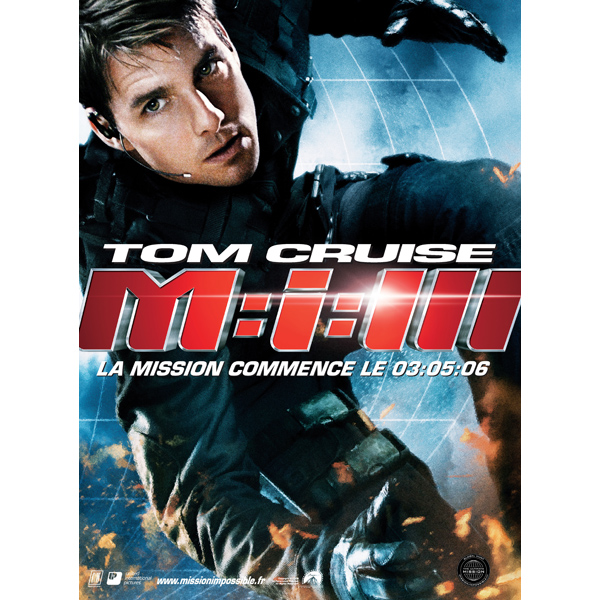
 Mission Impossible 3: Some of Tom Cruise’s best acting comes in these first five minutes, in which Ethan Hunt, chained to a chair, attempts to convince an eerily calm Philip Seymour Hoffman not to kill his fiancee. Maybe not the best opening scene but I love this movie.


Subscribe to:
Posts (Atom)