Good Claims:
Vivar Sonar Leer
Reading Reflecting and more reading
Not as Good Claims:
"When first looking at these amazing hand animals or paintings some may feel astonished or think it is unbelievable." - this claim evaluates the picture instead of analyzing.
"Reading through all the posts, you can't help but agree with him."
Friday, February 24, 2012

Thursday, February 23, 2012
Jaws submission

This opening scene is pivotal to the rest of the film because it already sets the stage for the theme of horrific deaths by sharks. The frantic movement of the kids and the thundering suspense of the music conveys this sense of carnage and trepidation so that the audience might pee their pants in fright.
The opening scene of Jaws features a lot of stereotypical thriller conventions: the tension filled music, the female character being the victim, having the other character – who could possibly save her- being unaware that anything is wrong. The girl, thinking she is safe when she swims to the buoy but is infact going to be eaten!
In the opening to the film the majority of the scene is shot from the sharks perspective giving the audience the idea that she is not safe and also gives some indictation in which direction the danger is coming from, this creates even more tension as the attack seems inevitable. The editing of the sequence when the two teenagers are running to the sea and when the girl is being attacked is shown in quick fast paced, frantic cuts of shots from different angles. In contrast to the calm, static, lingering shots of the boy who has fallen asleep on the beach. The opening sequence is set at night time/early morning. The scene starts off with a bunch of young students having a beach party, as you can imagine this usually includes. All of these small little things dealing with the motion of the characters add to the horror theme of the movie.
The beginning starts quietly, then the middle part where the tension becomes gradually louder and louder until the climactic ending becomes silent again. The silence at the end is a good representation of death. The screaming ans splashing about when the attack is happening is a great contrast to the boy lying peacefully on the sand near her. You kind of expect the boy to hear her struggle and the audience get a glimpse of hope that the boy will come and rescue the girl, but when that doesn't happen, the shark successfully kills the girl and the scene becomes silent once more.
The Calder Game post
The plot line is absorbing and intricate, and as with each of her previous books, Balliett introduces many concepts involving art, math and literature. We learn the myth of the Minotaur, that half-man, half-bull who ate humans. We learn more about pentominoes, Calder’s particular love, and explore the meaning of patterns of five. We see how words can go beyond our senses:
"Black, black, black went a drip someplace to his right. He’d never realized how much the word fit what it sounded like: the flatness, the no-color, of dark water on dark stone. Black, black, black. "
The change in the initially prickly relationship between Petra and Tommy is handled well and realistically, based as it is on their mutual feelings for Calder. Unless they can overcome their differences, they don’t stand a chance of finding him. With the stakes so high, this is very clear to both of them.
The ending is very satisfactory, wrapping up all the separate pieces. We’re also introduced to another interesting character who, I suspect (and hope), will become part of the team in the next book in the series.
Most wonderfully, though, I came away from my reading of this book with a desire to explore Alexander Calder’s work more fully. I wanted to see for myself the beauty of his mobiles. I wanted to play the Calder Game: design my own mobiles on paper, balancing ideas, things, concepts in ways they have never been balanced before.
Tuesday, February 21, 2012
Short List 2/21/12
Here are my opening scenes for the week:
 Jaws - There aren't many movies that can top the thrill and suspense of Jaws. It is one of the greatest and well-known movies of all time and that is why it is on my list.
 Indiana Jones: Raiders of the Lost Ark - Hunting for treasure, Arrows flying everywhere, Booby traps about ready to blow, and then there is the classic boulder ready to demolish anything in his path especially an agile little man named Indiana Jones.
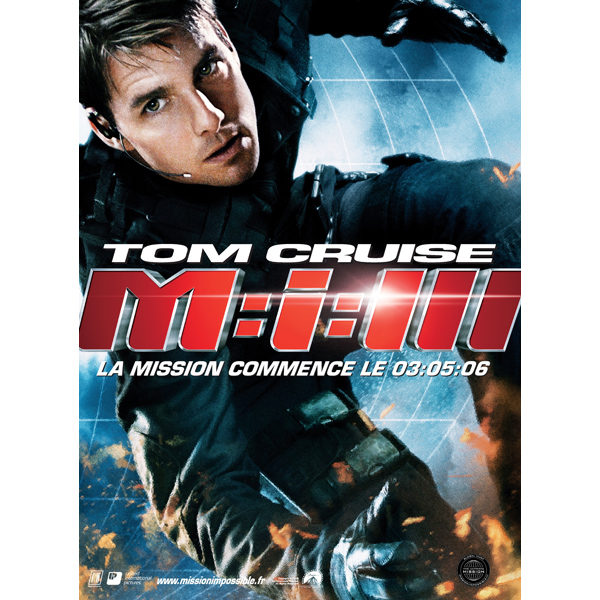
 Mission Impossible 3: Some of Tom Cruise’s best acting comes in these first five minutes, in which Ethan Hunt, chained to a chair, attempts to convince an eerily calm Philip Seymour Hoffman not to kill his fiancee. Maybe not the best opening scene but I love this movie.


Monday, February 20, 2012
Full Podcast Response on Middle School
I don’t know what it is about the middle school episode of This American Life, but it seems that everybody is able to connect with this episode. I think this happens for a couple reasons. 1) As far as I know, everybody went through middle school and it was only a couple of years ago. Therefore, we can all look back and remember a lot of little details from middle school that lets say a 40 year old wouldn’t be able to remember. 2) Middle school was a very important time because it was really when everybody started to grow up. It was that huge transition period between elementary school and high school (two completely different things). This transition is what caused the problems and laughs of middle school because everybody took this switch into the teen years at different paces – some people more mature then others, some people focused on sports or school or girls/boys or drugs. There were so many possibilities that none of us had ever experience. Stuff completely new to us. Didn’t know what to expect. Didn’t know what to do. And look what happened as a result: Middle School.
The podcast starts with Annie who is a little unsure of herself, which definitely is common in middle school. She doesn’t want to put her name out because of all the bullying and making fun of that could happen if anybody catches wind of her talking on the radio. However, she seems to express the same feeling that everyone has: middle school is just awkward and no one really enjoys it.
Probably my favorite part of the podcast is what follows Annie’s session: Middle School Dances. Once again, no one really knows what to expect or even what to do at a middle school dance because we had never done anything like it before. This uncertainty is progressed even more by the interviews of various middle school students. Ethan is afraid that he won’t know how to dance correctly, and as a result, he doesn’t slow dance with anyone. 5 different guys asked Autumn to the dance. However, instead of saying yes to one guy, she gives all the guys an “I don’t know,” leaving them in a state of befuddled hopefulness. Also, the 20-minute middle school relationships are classic. They show the kids as having a elevated aggressive amusement with "love" but it is very far from pragmatic.
Overall, the bleak pessimism that the kids exude through their unsureness about middle school underscores the negative influence that middle school has on young teenagers.
Overall, the bleak pessimism that the kids exude through their unsureness about middle school underscores the negative influence that middle school has on young teenagers.
Sunday, February 19, 2012
Podcast Response: Notes on Middle School
Everybody always seems to have that same outlook on middle school - it definitely wasn't the best experience ever (one to forget actually). Whether its the overall uncertainty about a school dance - asking a girl to dance (or getting asked by 5 different guys), deciding what to wear, trying not to get interrupted while slow dancing with the "special someone," getting asked out right as the dance begins while drinking a glass of root beer - or dealing with random problems like smelly kids, homework, and bullying over immature troubles. But either way, there appears to be a common consensus about middle school being an overall pain and a period of time to laugh upon but to forget and replace with high school.
Saturday, February 18, 2012
Reading post: The Calder Game
This book has been sitting on my shelf for literally forever. Picked it up randomly the other day.
Calder, Petra and Tommy are back again in The Calder Game, another mystery involving a famous artist – this time, it’s Alexander Calder and his beautiful mobiles and statues. The three find themselves separated near the beginning of the book when Calder goes to England with his father, who is attending a horticultural conference near Woodstock, home of Blenheim Castle.
One thing on my mind at the start of the book was how the author would manage to get Petra and Tommy across the ocean from Chicago to England. It does require rather more suspension of belief than normal, and is really the only “flaw” in the book. When Calder goes missing, Mrs. Sharpe arranges to bring both Petra and Tommy with her to England to help look for Calder; it did strike me as odd that there was no objection from the part of the parents to this arrangement. But this is a small point, and doesn’t take away from the rest of the book at all.
Which, in a nutshell, is really wonderful. As with her previous books, Balliett illustrates concepts and ideas beautifully with her writing; for example, in the following passage in an early chapter where the three children visit an exhibit of Alexander Calder’s mobiles with their classmates, Petra, the word lover in the group, comes to her own personal understanding of his art:
“Petra forgot the frustration of not being allowed to write, and thought instead about pulling sentences apart and balancing words in three dimensions, as if they could float off a page. Words as things, not just meanings … words in space, words set free! Could it be done? Petra’s mind felt as if it were exploding with possibilities.”
Helquist’s illustrations add to the mood of the story, and this time around, I found myself involved in the happenings in The Calder Game in a way that I wasn’t in the two previous novels. After all, there is so much more at stake. Calder is missing.
Subscribe to:
Posts (Atom)